
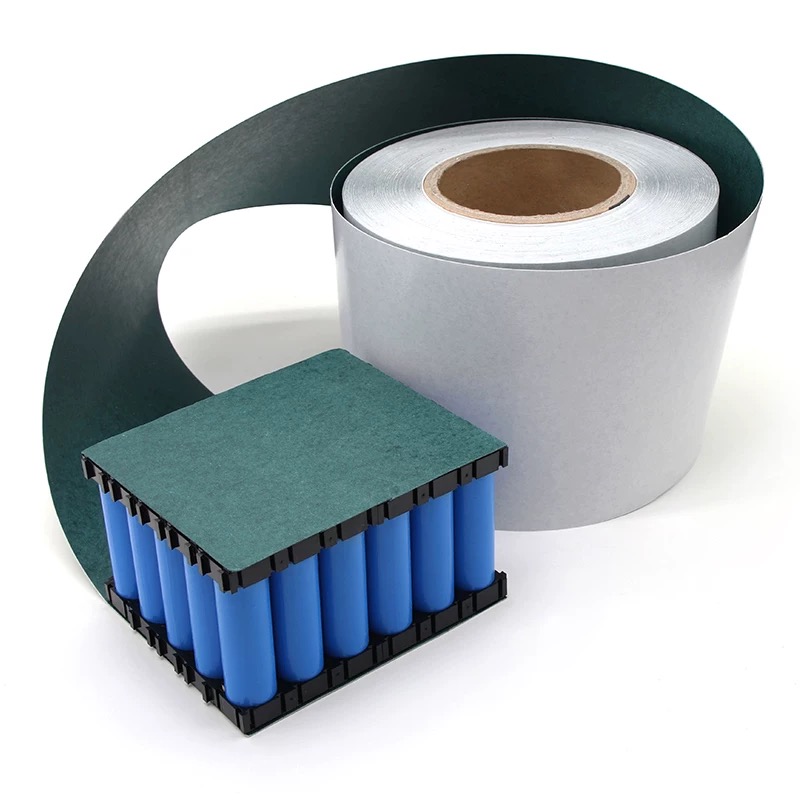
Product description
Product Name: High-Performance Battery Auxiliary & Functional Materials
Key Features and Specifications
| Material Category | Examples | Function |
| Separators | Polyethylene (PE), Polypropylene (PP), Ceramic-Coated Membranes | Physical Barrier between anode and cathode; ion transport medium; prevents short-circuits. |
| Binders | PVDF, SBR/CMC, PTFE | Adhesive that holds active material particles together and attaches the electrode film to the current collector. |
| Conductive Additives | Carbon Black (e.g., Super P, Acetylene Black), Carbon Nanotubes (CNTs), Graphene | Enhances Electron Conductivity within the electrode film. |
| Electrolyte Salts | LiPF₆, LiBF₄, LiClO₄ (Dissolved in solvents) | Ion Source and carrier for charge transfer between electrodes. |
| Electrolyte Solvents | EC, DEC, EMC, PC | Dissolves the Salt to form the liquid electrolyte; acts as the ion transport medium. |
| Key Advantage | Tuning Cell Performance (Power, Safety, Cycle Life, and Capacity) |
Product Summary
Battery Auxiliary Materials encompass a diverse and critical range of components, beyond the main active electrode materials, that are absolutely essential for the safe, stable, and high-performance operation of any electrochemical cell. These materials are meticulously engineered to control the internal chemistry, physical structure, and electron/ion transport within the battery.
From the separators that safeguard against internal short-circuits to the binders that maintain electrode integrity, and the conductive additives that ensure efficient electron flow, the selection and quality of these auxiliary materials directly determine the cell’s cycle life, power density, and overall safety profile.
Primary Applications
New Energy Research:
Cell Assembly: Mandatory components for the fabrication of all cell types, including coin cells, pouch cells, cylindrical cells, and supercapacitors.
Performance Tuning: Researchers use various types and ratios of binders and conductive additives to optimize electrode formulation for specific requirements (e.g., maximizing power output or improving long-term stability).
Safety Enhancement: Ceramic-coated separators are increasingly used to provide thermal shutdown capabilities and improve safety at elevated temperatures.
Materials Chemistry & Formulation:
Slurry Preparation: Binders and conductive additives are crucial ingredients in the electrode slurry formulation process (used with the Electrode Coating Device).
Electrolyte Engineering: Used to custom-formulate liquid and solid-state electrolytes by mixing salts and solvents, often with functional additives to passivate the electrode surface (SEI formation).
Technical Significance
The auxiliary materials are often highly sensitive to processing conditions and interact complexly with the active materials. For instance:
Separators must be porous enough to allow rapid ion transport but strong enough to withstand high pressure and cycling stress.
Binders must maintain adhesion during volume expansion and contraction of the active materials throughout the charge/discharge process.
Ordering and Consultation
We offer a high-purity selection of standardized and novel auxiliary materials.
Custom Consultation: Our technical team provides expert support for selecting the optimal binder type (e.g., aqueous vs. organic solvent systems) and conductive additive to match your specific electrode material and performance goals.
Ready-to-Use Solutions: Electrolyte solvents and salts are available in various purity grades and pre-mixed solutions.


