Product description
Product Name: High-Performance Components for All-Solid-State Battery (ASSB) Development
Product Summary
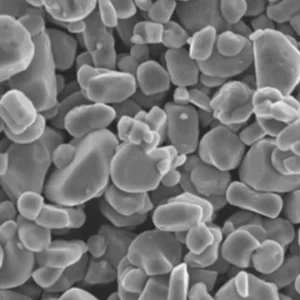
Our Solid-State Battery Research Materials portfolio is specifically curated to accelerate the development of All-Solid-State Batteries (ASSBs). ASSBs are the next frontier in energy storage, promising a paradigm shift by replacing the flammable liquid electrolyte with a solid-state ion conductor. This change is critical for achieving superior safety, higher energy density, and potentially lower cost compared to conventional Li-ion batteries.
We provide a specialized supply of solid electrolytes, stable anodes, and compatible interfaces that are rigorously tested for their high ionic conductivity and chemical compatibility, which are the primary technical hurdles in ASSB commercialization.
Key Material Categories
| Category | Examples | Primary Function |
| Solid Electrolytes (SE) | Garnet-type (LLZO), Sulfide-type (LGPS, LPS), Polymer-type (PEO-Li Salt Complex) | Ion Transport Medium (Allows lithium ions to move through a rigid solid matrix). |
| Anode Materials | Lithium Metal Foil (Li-foil), In-situ formed Li (for protected anodes), High-capacity Silicon or Graphite | Stores Lithium Ions (Li metal offers the highest energy density, enabled by the solid electrolyte). |
| Cathode Materials | High-Voltage NMC/LCO, often coated with protective Li-ion Conductive Coatings (e.g., LATP, LZO) | Stores and Releases Li Ions (Requires optimized surface to interface with the solid electrolyte). |
| Interface/Binder Materials | Specialized Non-Conductive Polymers, SE-Polymer Composites | Ensures Mechanical and Ionic Contact between the solid electrolyte and the electrode particles, which is critical for performance. |
| Precursors | High-Purity Metal Oxides, Sulfides, and Salts | Raw Ingredients for synthesizing custom solid electrolyte compounds (e.g., Li, La, Zr precursors for LLZO). |
Safety and Stability Enhancement:
Elimination of Flammability: Utilizing non-flammable solid electrolytes to remove the safety hazards associated with organic liquid electrolytes.
High-Energy Density Development:
Lithium Metal Anode Integration: Enabling the use of high-capacity Lithium Metal as the anode, which is highly unstable in liquid electrolytes but stabilized by a dense solid electrolyte.
Interface Engineering:
Reducing Interfacial Resistance: Researching and applying specialized buffer layers and coatings between the solid electrolyte and the electrodes to lower the crucial Interfacial Resistance, which is a main bottleneck for high-rate ASSB performance.
Cell Assembly:
Used for fabricating all-solid-state Coin Cells and small Pouch Cells using techniques like hot-pressing or lamination to ensure high-density, intimate contact between all solid components.
Technical Significance
Success in ASSB research depends on solving the dual challenges of achieving high ionic conductivity (comparable to liquid electrolytes) and ensuring stable mechanical/chemical contact at the solid-solid interfaces. Our materials are provided with certified properties (e.g., ionic conductivity, phase purity) to give researchers a reliable foundation for tackling these complex engineering problems.
Ordering and Consultation
We offer a flexible supply of highly sensitive solid electrolyte powders that require careful handling.
Expert Support: Our specialists can advise on the processing parameters (e.g., pressure and temperature for hot pressing) and material compatibility required to successfully integrate the solid electrolyte with your chosen electrode chemistry.
Custom Synthesis: We can source or synthesize customized solid electrolyte formulations and electrode coatings to meet unique research specifications.