
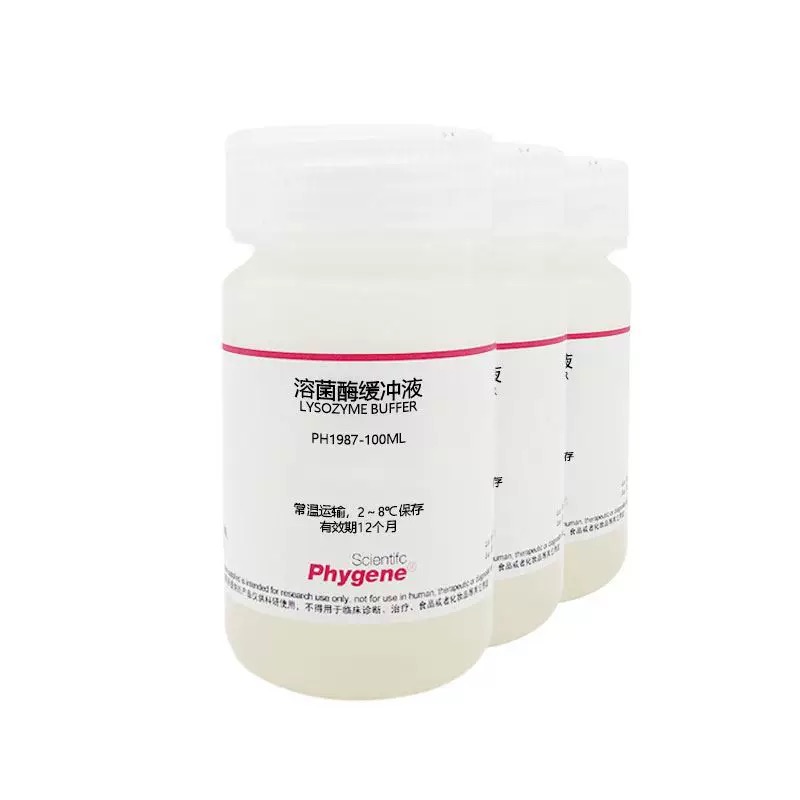
Product description
Product Name: Lysozyme Cell Lysis Buffer for Gram-Positive Bacteria
Product Summary
The Lysozyme Buffer is a specialized, crucial component in the workflow for Genomic DNA (gDNA) extraction from Gram-Positive Bacteria. Unlike Gram-negative bacteria, Gram-positive species possess a thick, rigid Peptidoglycan Layer in their cell wall, which makes them highly resistant to standard chemical or enzymatic lysis methods.
Key Features and Specifications
| Feature Category | Specification |
| Reagent Type | Enzymatic Lysis Buffer (Experimental Reagent) |
| Function | Cell Wall Digestion of Gram-Positive Bacteria |
| Key Component | Lysozyme Enzyme (often supplied separately or reconstituted immediately before use) |
| Buffer Components | Tris-HCl, EDTA (Chelates divalent cations to further destabilize the cell wall), and sometimes Sucrose |
| Target Microorganism | Bacteria with a thick peptidoglycan layer (e.g., Staphylococcus, Bacillus, Streptococcus) |
| Output Quality | High-quality, intact Genomic DNA suitable for PCR, sequencing, and other molecular applications |
| Key Advantage | Essential for overcoming the robust cell wall barrier of Gram-positive organisms. |
Genomic DNA Extraction:
Pre-Lysis Step: Used as the first incubation step in gDNA isolation protocols to break down the cell wall before adding standard lysis reagents (like Proteinase K or detergents).
Challenging Samples: Crucial for research involving environmental or clinical isolates of Gram-positive organisms (e.g., Staphylococcus aureus or Clostridium species) where complete cell lysis is difficult.
Molecular Biology:
PCR and Sequencing: Ensures the yield of highly pure gDNA, free from contaminants that could inhibit downstream molecular reactions such as PCR amplification, cloning, and Next-Generation Sequencing (NGS) library preparation.
Research & Development:
Strain Characterization: Used to prepare genomic DNA for genotyping, phylogenetic analysis, and molecular identification of bacterial strains.
Usage Protocol Notes
Incubation: Requires an optimized incubation time (typically 30–60 minutes) and temperature (usually 37°C) to allow the Lysozyme enzyme sufficient time to digest the peptidoglycan layer effectively.
Storage: Lysozyme is a temperature-sensitive enzyme. The buffer or the reconstituted enzyme should be stored at the recommended low temperature (-20∘C or 4∘C) to maintain its enzymatic activity.


