
Product description
Product Name: Specialized Materials for Redox Flow Battery (RFB) Development
Product Summary
Our Redox Flow Battery (RFB) Research Materials category provides the essential, high-performance components required for the research and development of these unique energy storage systems. RFBs store energy in liquid electrolyte solutions held in external tanks, which are then pumped through an electrochemical cell to generate power. This design offers crucial advantages in scalability, safety, and longevity independent of capacity/power constraints.
We supply a focused selection of materials critical for enhancing the electrode kinetics, membrane selectivity, and electrolyte stability of all major RFB chemistries, including Vanadium Redox Flow Batteries (VRFB) and emerging organic RFBs.
Key Material Categories
| Category | Examples | Primary Function |
| Active Species (Salts) | Vanadium Salts (VOSO₄, VCl₃), Iron/Chromium Salts, Zinc Halides | Charge Storage Medium. Dissolved in the electrolyte, these ions undergo reversible redox reactions. |
| Supporting Electrolytes | Sulfuric Acid (H₂SO₄), Methanesulfonic Acid (MSA) | Maintains Conductivity and stability of the active species solution. |
| Ion Exchange Membranes | Nafion membranes, Porous Polymer Membranes, Anion/Cation Exchange Membranes | Separates the positive and negative electrolytes while selectively allowing ion (H⁺ or others) transport. |
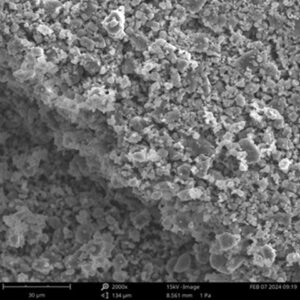
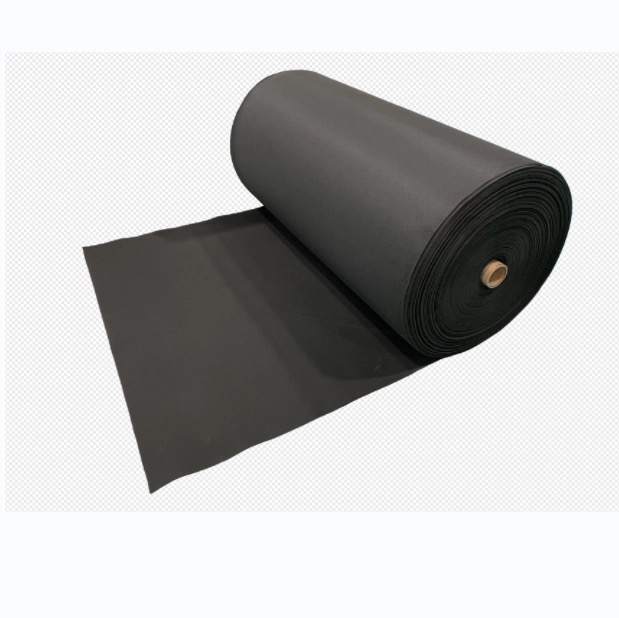
| Electrodes | Carbon Felt, Graphite Felt, Carbon Paper (often thermally or chemically treated) | Site of the Redox Reaction. Provides high surface area and conductivity for electron transfer. |
| Current Collectors | Graphite Plates, Bipolar Plates (often carbon-polymer composites) | Distributes Current across the electrode and acts as the cell boundary. |
Primary Applications
Grid-Scale Energy Storage:
Scalability: RFBs are uniquely suited for large-scale, long-duration energy storage applications (e.g., utility grid balancing, renewable energy integration) due to the decoupling of power (cell stack size) and capacity (tank size).
Electrolyte Optimization:
Solubility and Stability: Research into increasing the concentration and temperature stability of the active species (e.g., high-concentration Vanadium electrolytes) to maximize energy density.
Cell Performance Enhancement:
Electrode Modification: Used to test different thermal or electrochemical treatments on carbon felt/paper to increase active surface sites, improve wettability, and accelerate the kinetics of the redox reactions.
Membrane Selectivity:
Crossover Mitigation: Development and testing of new, low-cost membranes that minimize the unwanted crossover of active species (which causes capacity fade) while maintaining high ionic conductivity.
Technical Significance
The core performance factors of an RFB are driven by its materials:
Electrode: The electrode material’s surface activity is paramount to achieving a fast and efficient reaction rate, which determines the power density of the battery.
Membrane: The membrane’s area-specific resistance and selectivity determine the cell’s Coulombic efficiency and power output.
Electrolyte: The solubility limit of the active species directly dictates the cell’s maximum energy density.
Ordering and Consultation
We offer high-purity salts and various grades of functionalized carbon and graphite materials.
Expert Support: Our technical team can advise on the proper treatment and conditioning of carbon electrodes and the selection of ion-exchange membranes to optimize your specific RFB chemistry (e.g., Vanadium, Zinc-Bromine, or organic-based).
Customization: We supply current collector and bipolar plates in custom dimensions to fit your single-cell or stack prototype design.